
By BRUCE RITCHIE
Floridaenvironments.com
ST. TERESA, Fla. — Florida State University’s Betsy Mansfield said that while researching the social effects of the loss of oyster harvesting in Apalachicola Bay she discovered a deep sadness and mourning that fishery closure brought to local residents.
Mansfield conducted in-depth interviews with 28 area residents after Florida closed the bay in 2020 to oyster harvesting to allow for restoration following the collapse of the shellfish population.
She documented and categorized concerns about the direct effects on commercial fishing families, seafood workers and others who felt the ripple effects. In addition to thThe closure Apalachicola Bay oyster harvesting caused mourning for a lost community identitye economic concerns, she was struck by the emotional suffering caused by the loss of the historic fishery.
“They care about this environment — they have generational ties to this activity and this livelihood,” she said during an April 16 research presentation at the FSU Coastal and Marine Laboratory along the Gulf Coast in St. Teresa.
“[They] talk about the loss of oysters as it being a depression people felt,” Mansfield said. “People felt the social well being of the community was really affected by this [oyster] population loss, this identity loss.”
Florida, in 2013 under then-Gov. Rick Scott, sued Georgia, blaming that state’s water use upstream from Apalachicola Bay for the oyster population collapse. But the U.S. Supreme Court sided with Georgia, blaming excessive oyster harvesting prior to 2013 for the fishery’s collapse.
The state reopened Apalachicola Bay to oyster harvesting for two months in January as it continues efforts to research and rebuild oyster reefs. FSU’s marine lab is playing a key role in the effort as part of the university’s Apalachicola Bay System Initiative.
Mansfield told the audience a variety of factors, including overharvesting and lack of oyster reef maintenance, led to the population collapse. With a doctorate in biology from Stanford University, Mansfield conducted her interviews in 2023 and 2024 about the social impacts and ripple effects.
She said with the loss of oysters some harvesters retired early, found other jobs including working as charter fishing guides, or they moved away to find other work.
Seafood dealers also shifted where they were buying oysters from.
“In the past five years if you had an oyster that wasn’t farmed here in Apalachicola, you probably had a Louisiana or a Texas oyster,” she said.
Seafood dealers also shifted to other food products, including finfish. And seafood processors reduced the hours their employees worked.
She said the additional emotional loss she discovered were not surprising but also were an “emotionally fraught” component of her research.
People mourned the loss of oyster fishing future for their children as had been passed down through generations.
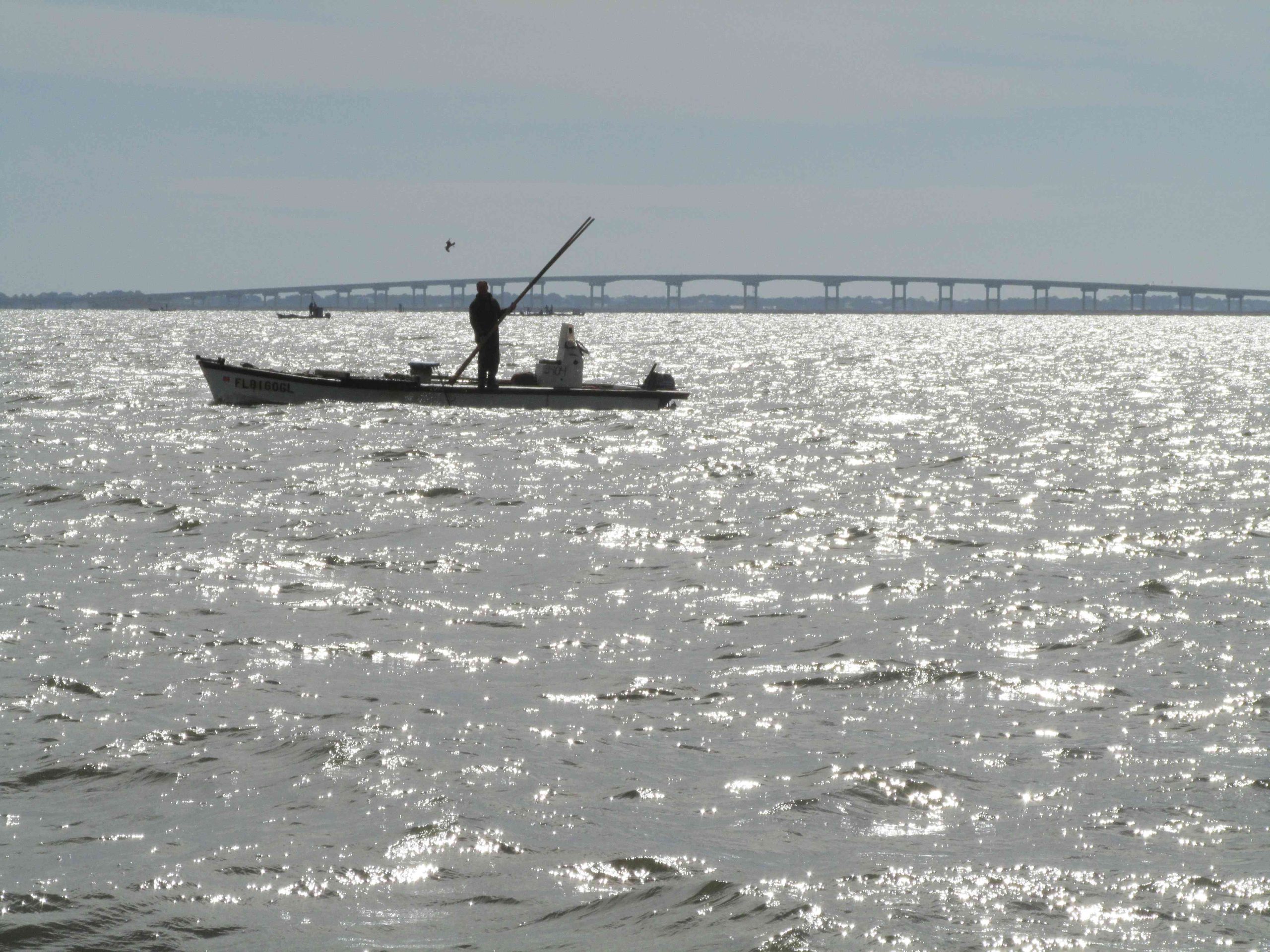
They mourned the loss of seafood processing houses that lined Apalachicola Bay and views of dozens or hundreds of boats with fishing families harvesting oysters from the water.
“I think really with the community identity comes a sadness at knowing what once was there, and seeing the loss and the impacts,” she said. “And the impact on younger people and on families not being able to make the incomes.”
(Photo copyrighted by Bruce Ritchie)